
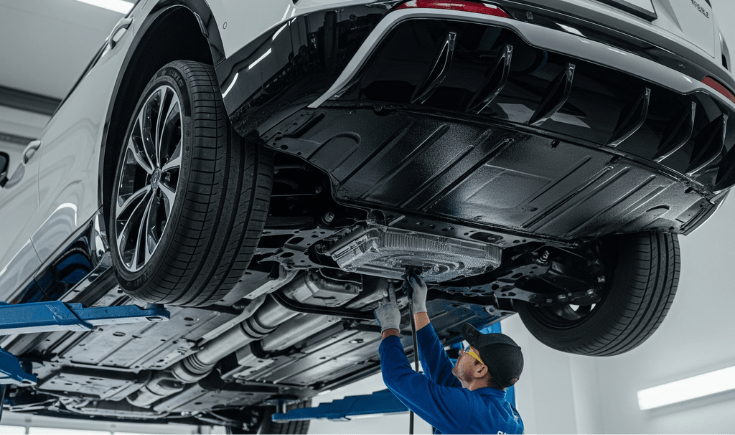
As electric vehicles (EVs) gain momentum across India and the world, protecting their underbody becomes more important than ever. Unlike traditional fuel-powered cars, EVs have delicate components like battery packs and wiring systems located closer to the underside, making them vulnerable to rust, moisture, and road grime. This is where underbody coating for EVs plays a crucial role. In this blog, we’ll explore the best underbody coating options for EVs in 2025, their pros and cons, and why investing in the right one can extend the life of your electric car.
Why EVs Need Special Attention for Underbody Protection
Electric vehicles (EVs) often come equipped with high-voltage battery systems mounted beneath the car, along with complex cabling and cooling systems that are critical to their operation. Many EVs also use lightweight metal alloys to reduce weight and improve efficiency, but these materials can be more prone to corrosion. During monsoon and winter seasons, these underbody components are regularly exposed to rainwater, mud, road salt, and chemicals, increasing the risk of rust and damage. This makes underbody coating a necessary protective measure to ensure the long-term durability and safety of electric vehicles.
Best Underbody Coating Options for EVs in 2025
1. Ceramic Underbody Coating: This option is best for those seeking long-term durability and excellent heat resistance. It offers high protection against corrosion and extreme temperatures, making it ideal for harsh driving conditions. With a lifespan of up to 5 years, it provides lasting performance and peace of mind. Additionally, it's eco-friendly, containing low levels of volatile organic compounds (VOCs). However, the main drawback is its higher cost compared to other underbody coating options.
2. Rubberized Underbody Coating: This underbody coating option is ideal for those looking to reduce road noise while gaining moderate protection. It provides excellent insulation against vibrations and external noise, creating a quieter cabin experience. Its flexible, crack-resistant nature makes it suitable for everyday driving conditions, and it’s also budget-friendly. However, it may wear out more quickly when exposed to extreme climates, requiring more frequent reapplication.
3. Bitumen-Based Underbody Coating: This type of underbody coating is best suited for budget-conscious car owners living in less humid regions. It's affordable and widely available, offering decent protection against gravel impact and minor rust formation. However, it lacks strong heat resistance and may develop cracks over time, especially under high-stress or extreme weather conditions, making it less ideal for long-term durability.
4. Things to Check Before Applying Underbody Coating to an EV: When applying underbody coating to electric vehicles, it’s crucial to ensure that the service center uses EV-safe application methods. Special care must be taken to avoid coating sensitive components like battery cooling vents and sensor units, as improper application can affect performance and safety. It's also important to choose coatings that are non-conductive and heat-resistant to protect the vehicle without interfering with its electrical systems. Always rely on EV-certified or trained professionals who understand the unique requirements of electric vehicle maintenance.
Conclusion
When applying underbody coating to electric vehicles, it’s crucial to ensure that the service center uses EV-safe application methods. Special care must be taken to avoid coating sensitive components like battery cooling vents and sensor units, as improper application can affect performance and safety. It's also important to choose coatings that are non-conductive and heat-resistant to protect the vehicle without interfering with its electrical systems. Always rely on EV-certified or trained professionals who understand the unique requirements of electric vehicle maintenance.
Frequently Asked Questions (FAQs)
Q1. Is underbody coating necessary for electric vehicles in India?
A1: Yes, underbody coating is highly recommended for EVs, especially in India where roads are exposed to rain, mud, and chemicals. Since EVs have sensitive components like battery packs and wiring near the undercarriage, coating helps prevent corrosion, water damage, and premature wear.
Q2. Which underbody coating is best for EVs in 2025?
A2: Ceramic underbody coating is considered the best in 2025 for its durability, heat resistance, and eco-friendly properties. It’s ideal for premium EVs. For budget-conscious users, rubberized coatings offer a good balance of noise insulation and protection.
Q3.Is bitumen-based coating safe for EVs?
Bitumen-based coating can be used but is not ideal for EVs with high-performance batteries. It lacks heat resistance and may crack over time, making it better suited for regions with mild climates and less exposure to extreme weather.
Q4.Can underbody coating damage EV battery systems?
A4: If applied improperly, yes. Coating over cooling vents, sensor units, or wiring can lead to overheating or system malfunction. That’s why it’s crucial to have the coating applied by EV-certified technicians using non-conductive, EV-safe products.
